In today’s world, everyone owns something that is battery-powered. Most battery-powered devices use lithium-ion batteries. Generally, these batteries prove to be inherently safe. However, they are man-made and therefore may fail or malfunction for a variety of reasons.
These batteries can be found in cell phones, hand tools such as drills and lawn maintenance equipment, e-bikes, personal mobility devices, snow and leaf blowers, etc. More and more equipment is being converted from liquid fuels to battery power.
Lithium-ion battery fires can escalate quickly—know the risks.
If the batteries fail, there are significant dangers. Initially, the primary danger is fire. The batteries, when failing in certain circumstances, undergo a chemical degradation referred to as “thermal runaway.” This, in layman’s terms, means that the battery keeps getting hotter and hotter until a fire erupts. Once the fire begins, it will burn extremely hot, and the fire will rapidly spread. The smoke produces numerous dangerous gases, including hydrogen cyanide, carbon monoxide, and hydrogen fluoride. All of these gases are fatal if inhaled above certain thresholds.
These batteries are constructed in such a way that they do not require oxygen to burn. Once on fire, they create their own oxygen. Therefore, they can burn underwater or under dirt/sand. If a fire erupts, PLEASE exit and evacuate the home and call 9-1-1. Even small breaths of these gases can cause death or severe medical issues. While these types of fires are not typical, we have responded to several of them, with one causing a home to be completely consumed by fire.
For lithium-ion battery safety, we recommend the following: only use the batteries recommended by the manufacturer. There are off-brand batteries, and while they are cheaper, they are not recommended by the manufacturer. Try not to leave batteries charging overnight or where they cannot be monitored. Thermal runaway is a fast-moving process, and early detection is necessary to minimize potential damage. If a fire occurs, leave and call 9-1-1. As noted, off-gassing smoke can be deadly if inhaled.
We will review the hazards from a fire perspective with respect to EVs (electric vehicles) in a follow-up post.
If you would like additional information or to host our Community Outreach Team at your HOA or business for fire safety information, please reach out to us at:[email protected] or [email protected]


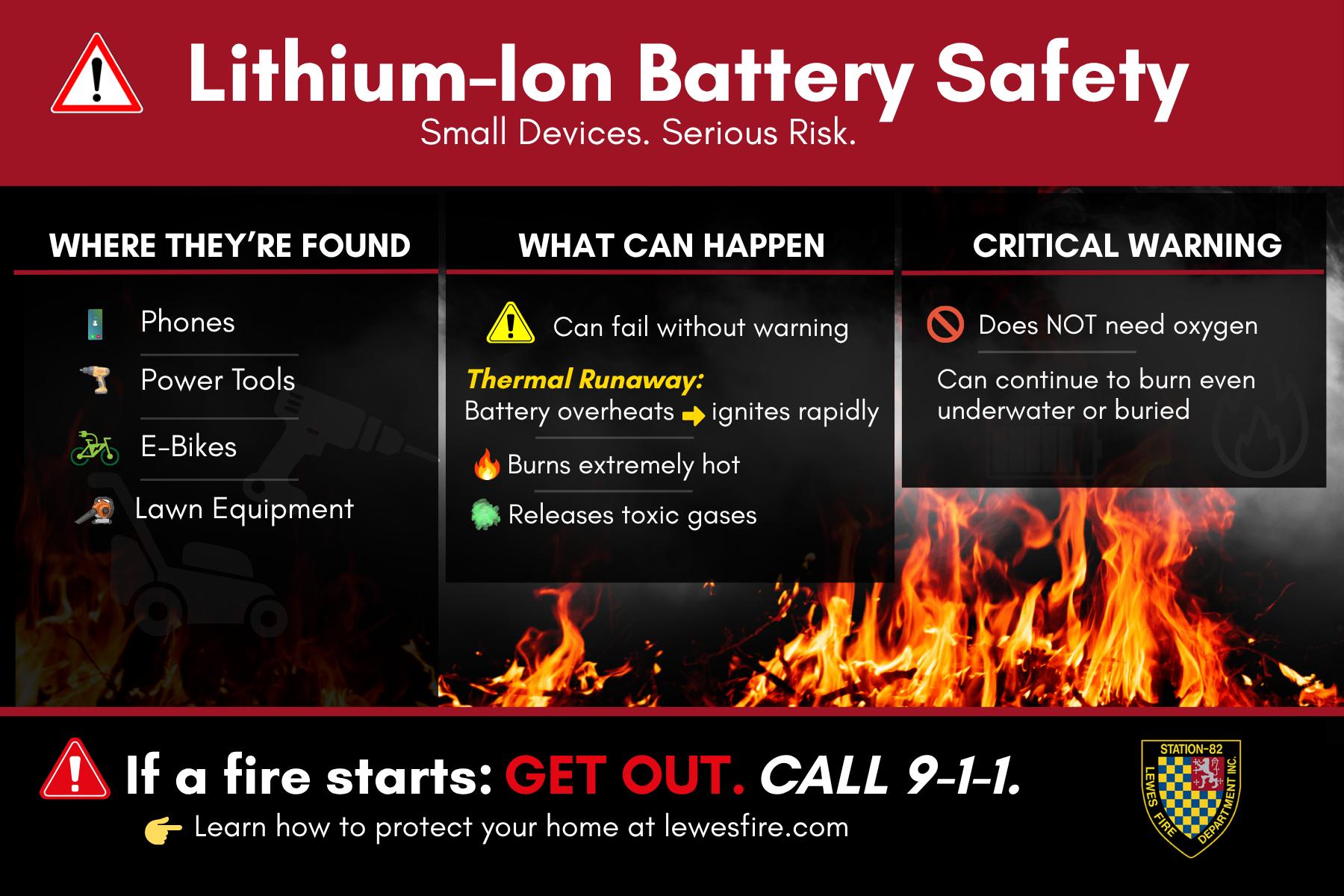
 Lithium-ion battery fires can escalate quickly—know the risks.